
THE ORIGIN STORY
The Cow Who Refused to Be Ordinary
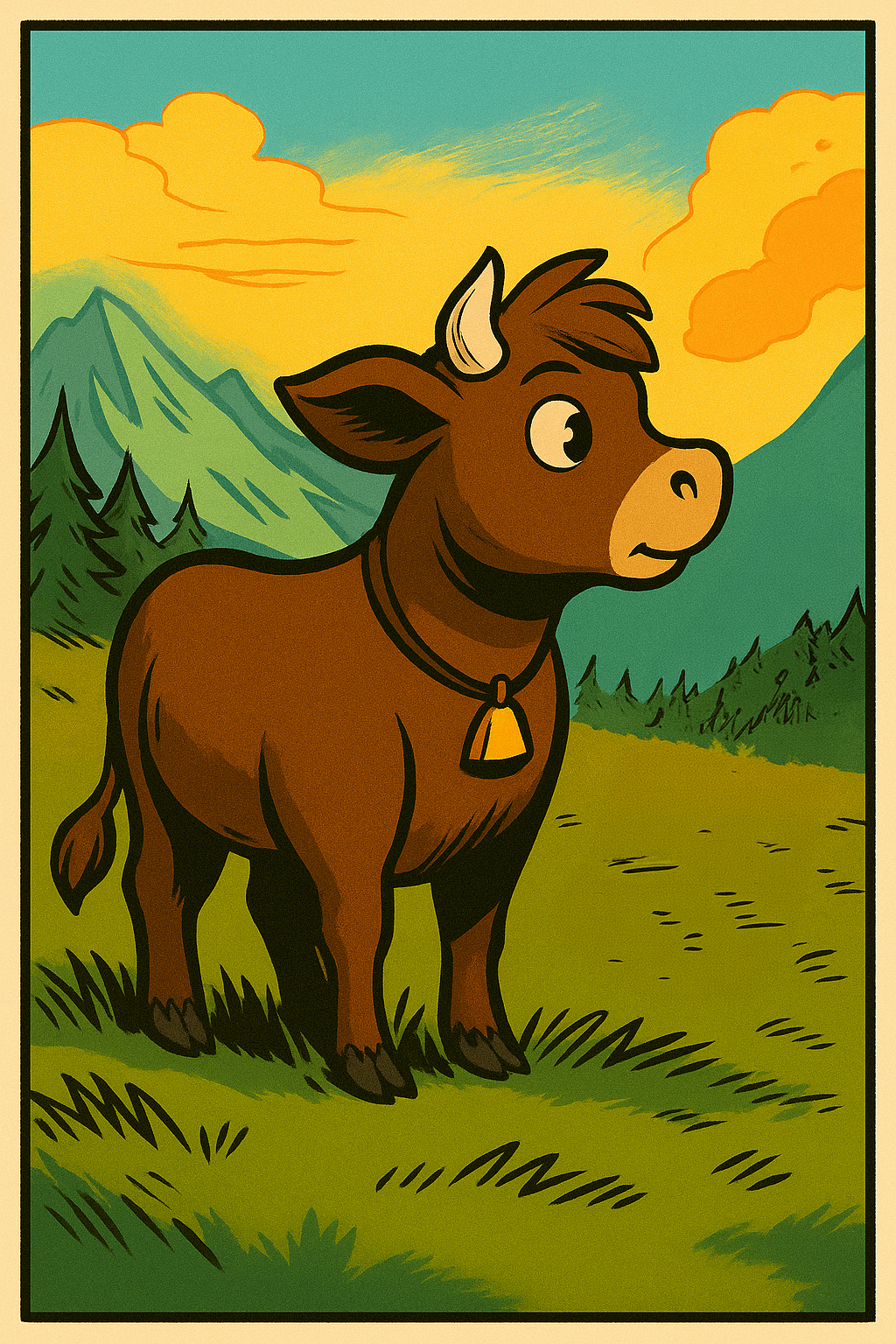
She was born in Bad Gastein, in a meadow that smelled of pine and cold water, surrounded by very good cows who were happy being very good cows. Bertha was not. While the others grazed, she trained — charging the upper pasture before dawn, perfecting a signature ground-shaking move she called theAlpen-Stampfer, and spending her evenings sewing a wrestling mask from a stolen dirndl apron, which fit perfectly and which nobody in the valley ever mentioned finding. She had seen a photograph of a luchador once, suspended mid-air over a roaring crowd, and something in that image had pressed against her chest ever since like something warm and unfinished. She was ready. She just needed the right moment to leave.

The Long Road South
One Almabtrieb and an Extremely Long Walk
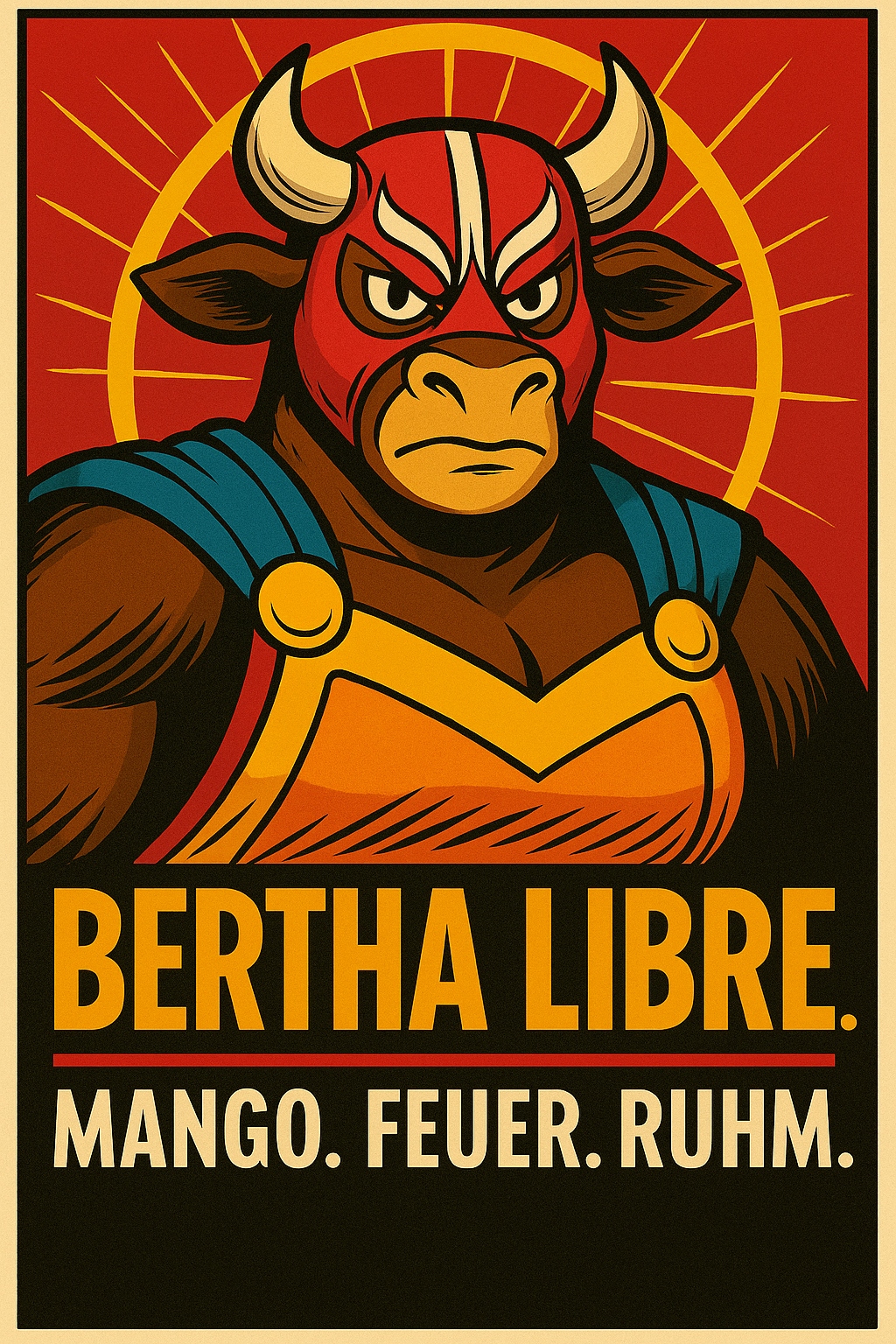
The moment came at the Almabtrieb — the end-of-summer procession back down from the mountain huts to the winter stalls. Bertha walked with the herd until the first bend, stepped quietly behind a spruce tree, and let the river of cows flow past without her. She made it through the Alps in the back of a vegetable truck (smelling, on arrival in Italy, entirely of fennel), across the continent by a combination of stubbornness and charm, and into Mexico on terms that remain diplomatically unclear. She found the wrestling circuit in Oaxaca on a Tuesday night and signed her first contract before the evening was out. Victories followed. So did friends, enemies, and a championship belt. And in the hills outside the city, an old woman who grew mangoes and habaneros shared with her a drink sharp and sweet in a way that did not resolve — like a question you keep asking. Bertha learned the recipe, made it her own, brought a bottle to her next match. Her corner-man took a sip before the opening bell and described it afterward as being struck by a very polite lightning. She won in under a minute. After that, the name followed naturally: Bertha Libre. The greatest luchador cow Mexico had ever seen.
The Return
Bad Gastein, Somewhat Surprised
She came back in October, three years later, with a championship belt over one shoulder and a crate of bottles under the other. That night at the Gasthaus, she set them on the bar. By the end of the week, a teenager had announced she was crossing Mongolia by motorcycle, a man in his fifties had signed up for the ceramics class he'd been putting off for twenty years, and the local baker had started looking at apartments in Lisbon. None of it was the drink, exactly — but the drink made the room feel like the world was larger than the room, the way a window does, or the right story told at the right time. The mountains hadn't changed. Something else had. Bertha stayed through the winter, trained every morning on the frozen pasture, and poured the drink for anyone who asked. Some recipes travel far to find their home.
The drink she brought back is the one in the bottle today: MaHa Shot, the mango habanero liqueur from Gastein Moonshine — the creative collective in the Gastein valley that the brand belongs to. Still the original from Bad Gastein, and still poured for anyone who asks.
